Care
How to Care for a Leather Bag
Leather bags need less care than most people think. A simple routine of brushing, occasional conditioning and smart storage keeps one going for decades.
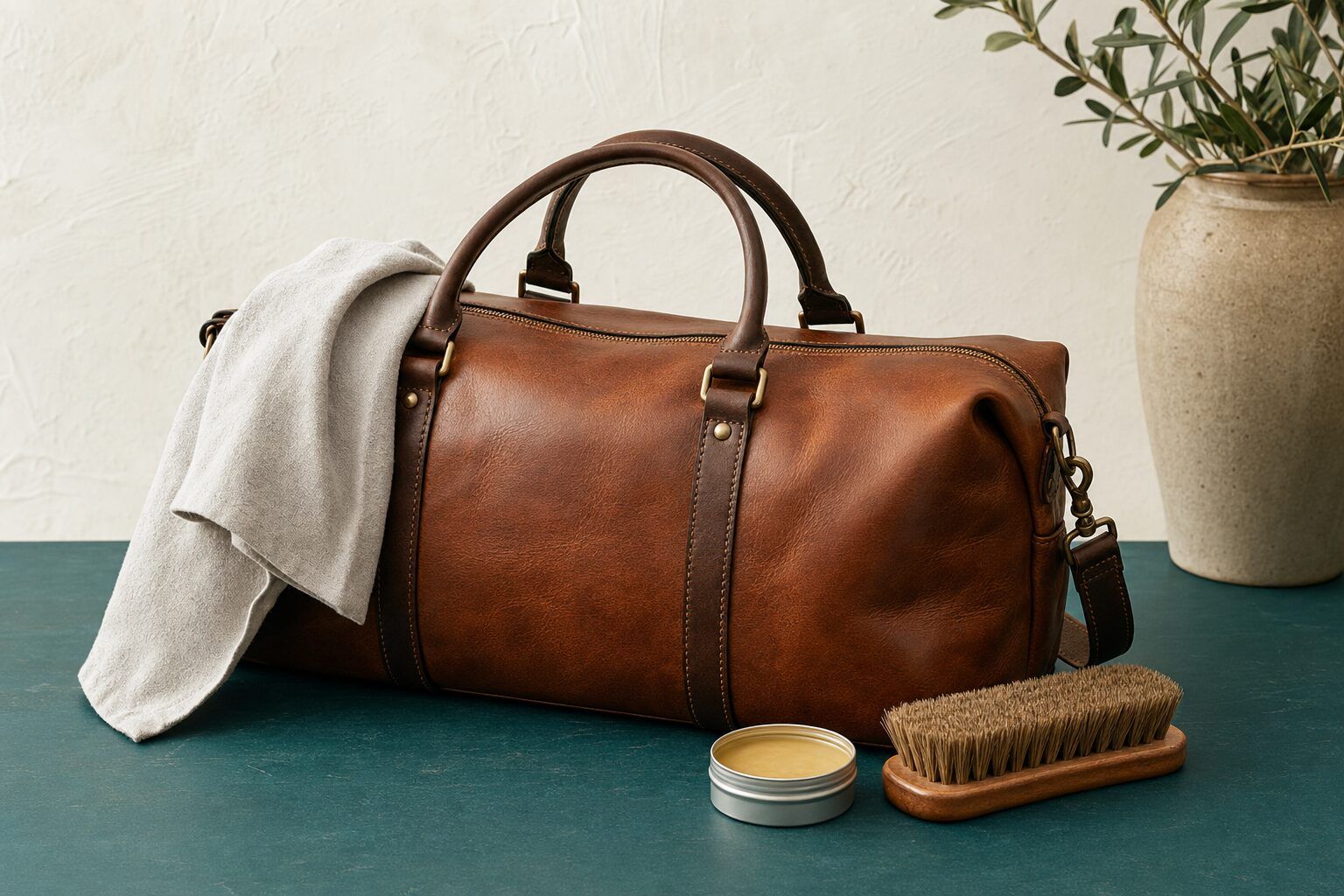
Leather is skin, and skin likes a little moisture, not much. Most damage to leather bags comes from two extremes: too much water at once, or years of drying out with no care at all.
The routine
Every few weeks: brush off dust with a soft horsehair brush or wipe with a dry cloth. Dust is abrasive and dries leather out.
Two to four times a year: clean and condition.
- Wipe the bag with a barely damp cloth to lift dirt.
- Let it dry completely.
- Test the conditioner on a hidden spot. Some darken leather.
- Apply a small amount with a soft cloth in circles. A little goes a long way.
- Let it soak in for a few hours, then buff off any excess.
That’s it. Over-conditioning can make leather soft, floppy and sticky, and can darken it more than you want.
If it gets wet
Rain won’t ruin a full-grain bag, but drying it wrong can.
- Blot off surface water with a towel.
- Stuff the bag with paper so it keeps its shape.
- Let it dry at room temperature, away from heaters and direct sun.
- Condition lightly once it’s fully dry.
Never use a hair dryer or put it near a radiator. Fast drying makes leather stiff and can crack it.
Scratches and scuffs
On full-grain and oiled leathers, many light scratches fade if you rub them firmly with a clean finger. The warmth and your skin’s oil work the surface back together. Deeper scratches soften with a little conditioner. Over time they become part of the patina.
Coated and top-grain leathers don’t self-heal like this. Use a matching cream polish if a scuff bothers you.
Stains
- Water spots: wipe the whole panel lightly with a damp cloth so it dries evenly.
- Oil or grease: blot, then cover with cornstarch overnight and brush off.
- Ink: hard to remove at home. A leather specialist is the safer choice.
Storing a bag
- Stuff it with paper or a towel to keep its shape.
- Store it in a cotton dust bag or pillowcase, not plastic. Leather needs to breathe.
- Keep it out of hot attics and damp basements.
- Hang it by the handles only if they’re sturdy. Otherwise store it flat or upright.
Hardware and zippers
Wipe brass hardware occasionally. If a zipper starts sticking, run a wax stick or a little paraffin along the teeth. Don’t force a stuck zipper. That’s how teeth break.
Good care is cheap. A brush, a cloth and a tin of conditioner cost less than a dinner, and they’re the difference between a bag that cracks in five years and one that lasts twenty. See what makes a bag durable for the construction side.
Frequently asked questions
How often should I condition a leather bag?
Two to four times a year for a bag used daily, more often in a dry climate and less in a humid one. If the leather looks dry, pale or starts to feel stiff, it's time.
Can I use olive oil or coconut oil on leather?
It's better not to. Food oils can go rancid, darken leather unevenly and attract dirt. Use a conditioner made for leather.
How do I get rid of the new leather smell?
Air the bag out in a shaded, ventilated spot for a few days, open and empty. A box of baking soda or some newspaper placed inside can help absorb the smell. Avoid direct sun, which dries leather.
Still deciding? Answer five quick questions and we'll point you to the bag type that fits.
Find my bag type