Construction
What Makes a Bag Durable?
Leather gets the attention, but bags usually fail at seams, strap anchors, zippers and edges. Here are the seven construction details that decide how long a bag lasts, and how long a good one should.
When a leather bag fails, the leather is rarely the first thing to go. It’s the thread, the glue, a clip or the zipper. So durability is mostly about construction.
1. Strap anchors
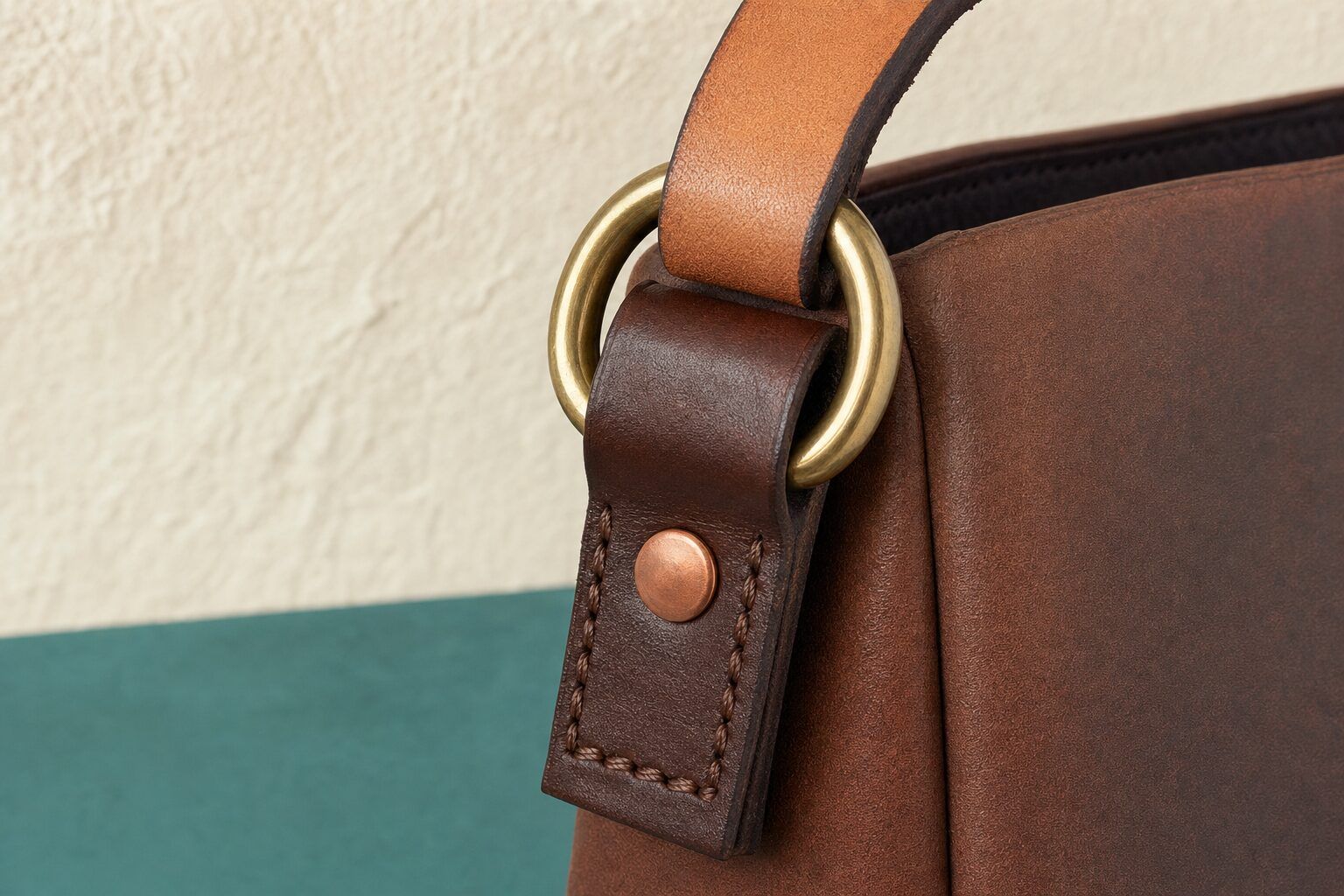
This is where the whole weight of the bag hangs. Good anchors are stitched and riveted: thick thread in a box or X pattern, plus a rivet through the leather. Weak anchors are a thin tab glued and single-stitched. Owner complaints about straps tearing off almost always involve the second kind.
2. Thread and stitching
Look for thick, even stitches with no loose ends. Heavy polyester or nylon thread is common on durable bags because it doesn’t rot. Hand saddle-stitching is strongest, because one broken stitch doesn’t unravel the seam, but good machine stitching with heavy thread holds up well too.
3. Hardware
Rings, buckles and clips should be solid brass or stainless steel. Cheap hardware is often plated zinc alloy. It looks the same new, then the plating wears off and the metal can snap under load. Swivel clips on shoulder straps are the most common failure point on budget bags.
4. Zippers
A failed zipper can make a bag unusable. Look for metal zippers from a named maker. Chunkier teeth (a #8 or #10 size) last longer on bags that get stuffed full. Check that the zipper ends are covered by leather tabs so they don’t fray.
5. The base
The bottom takes the most abrasion. Durable bags add a second layer of leather, metal feet or a stiffener so the base doesn’t sag and the corners don’t wear through.
6. Edges
Cut leather edges are either burnished (sanded and polished smooth), painted with edge paint, or folded and stitched. Burnished and folded edges age well. Thick edge paint can crack and peel over time, which is a common complaint on fashion bags.
7. Lining
A lining hides the construction, which can be good or bad. Fabric linings wear and tear before the leather does. Unlined bags, or bags lined with leather or heavy canvas, tend to last longest. Pockets sewn into a thin lining are often the first thing to rip.
How long should a bag last?
From what owners report over the years:
| Bag | Typical lifespan with daily use |
|---|---|
| Bonded or PU “leather” | Under 2 years |
| Genuine (split) leather, glued construction | 1 to 3 years |
| Top-grain, decent construction | 3 to 8 years |
| Full-grain, stitched and riveted, solid hardware | 10 to 20+ years |
These are typical ranges, not promises. Care and how much you stuff the bag both matter.
The quick in-hand test
If you can handle the bag before buying:
- Pull hard on the strap at the anchor. Nothing should creak or shift.
- Look inside at the seams. Are there raw edges or loose threads?
- Feel the hardware. Solid brass is heavy for its size.
- Run the zipper fully open and closed along the curve.
- Press the bottom corners. They should feel reinforced.
Online, owner reviews are your stand-in for the in-hand test. That’s what our owner review roundups are for.
Frequently asked questions
How long should a quality leather bag last?
With daily use and basic care, a well-made full-grain bag commonly lasts 10 years or more, and some last decades. Budget leather bags often show wear in one to three years, usually at the straps and corners first.
Which part of a bag fails first?
Most often the strap anchors, the zipper or the shoulder strap clips. Those parts carry the full load every time you lift the bag.
Can a leather bag be repaired?
Usually, yes. Restitching, replacing a zipper, swapping a buckle or rebuilding a strap are routine jobs for a leather repair shop or cobbler, and some makers repair their own bags.
Still deciding? Answer five quick questions and we'll point you to the bag type that fits.
Find my bag type