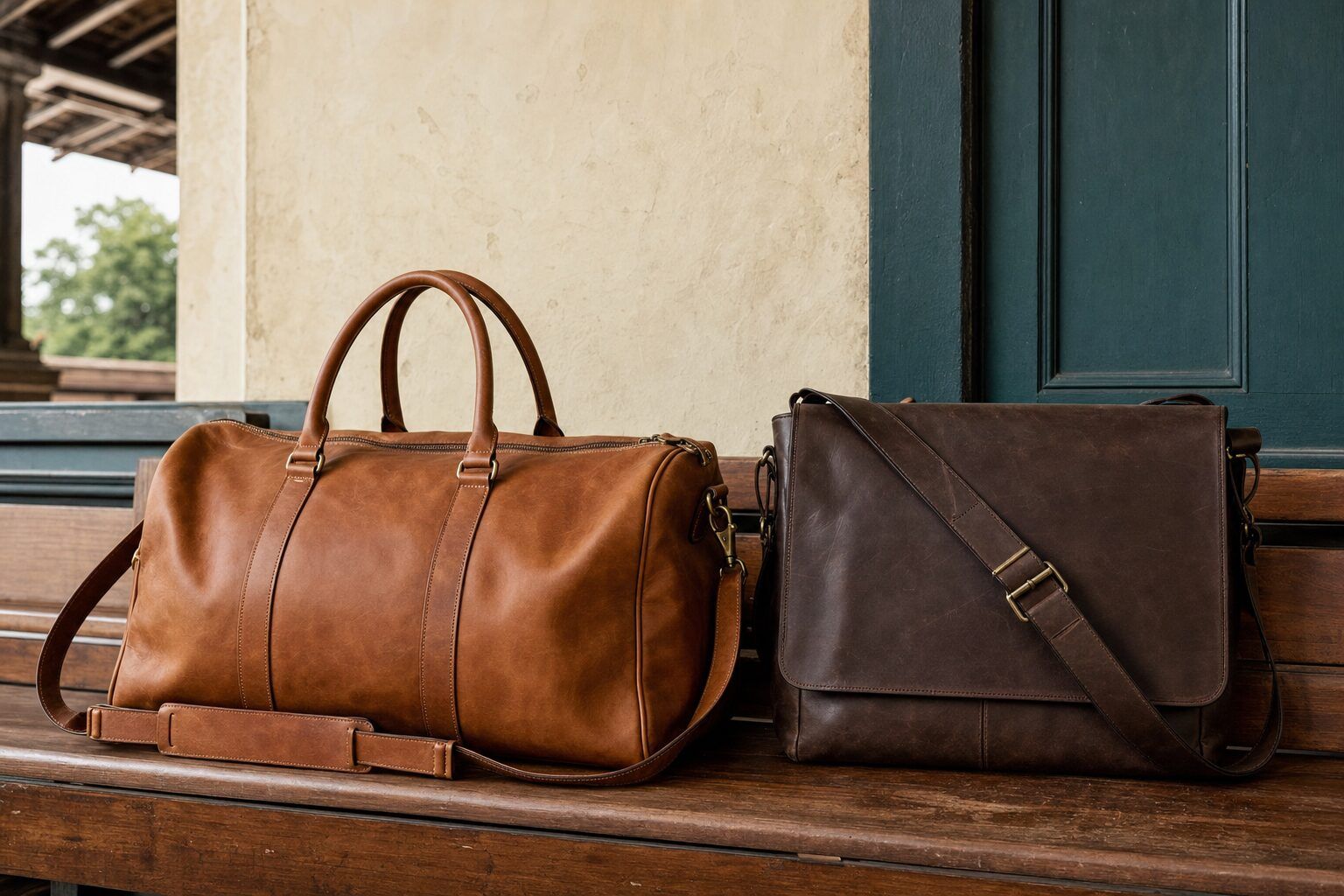
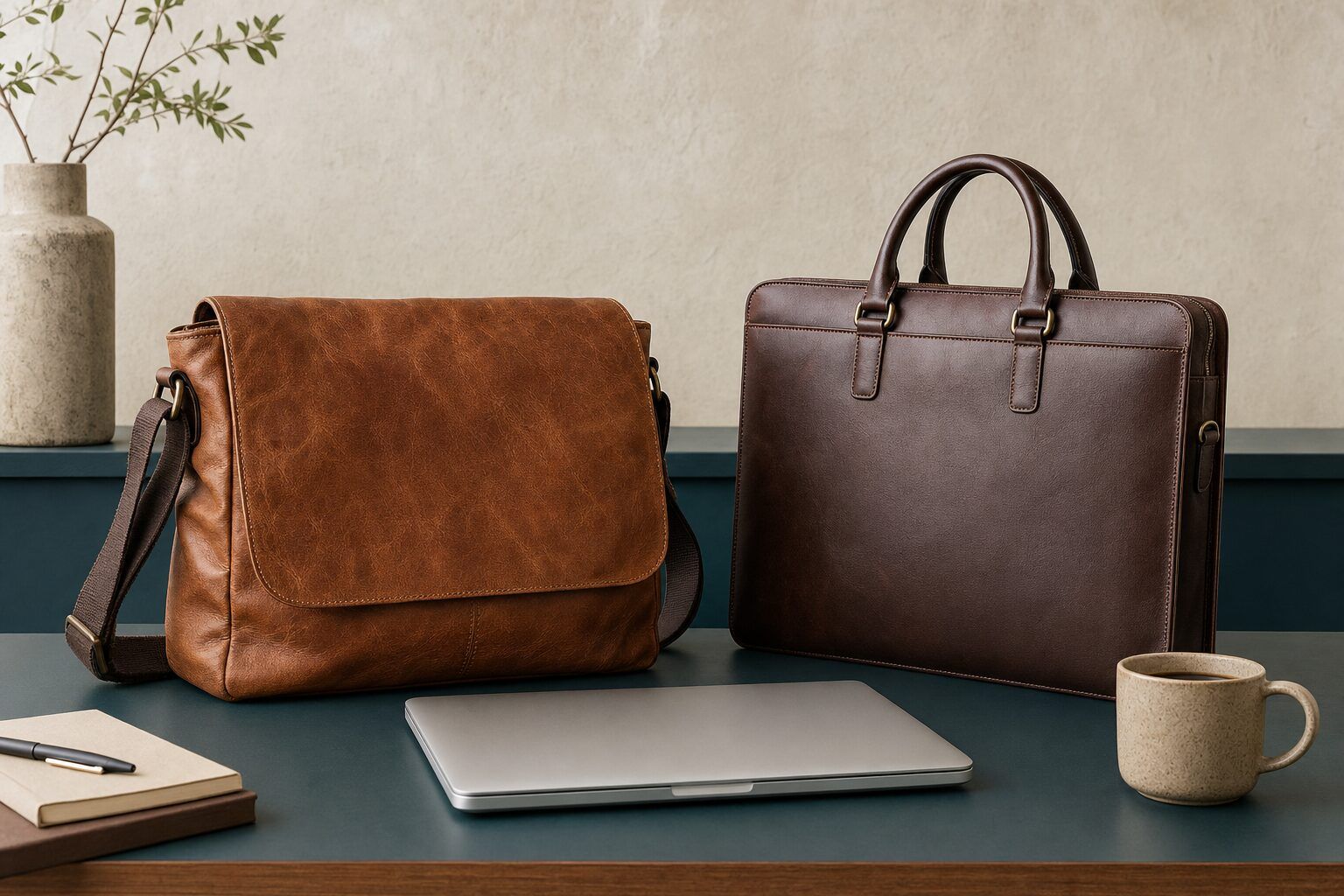
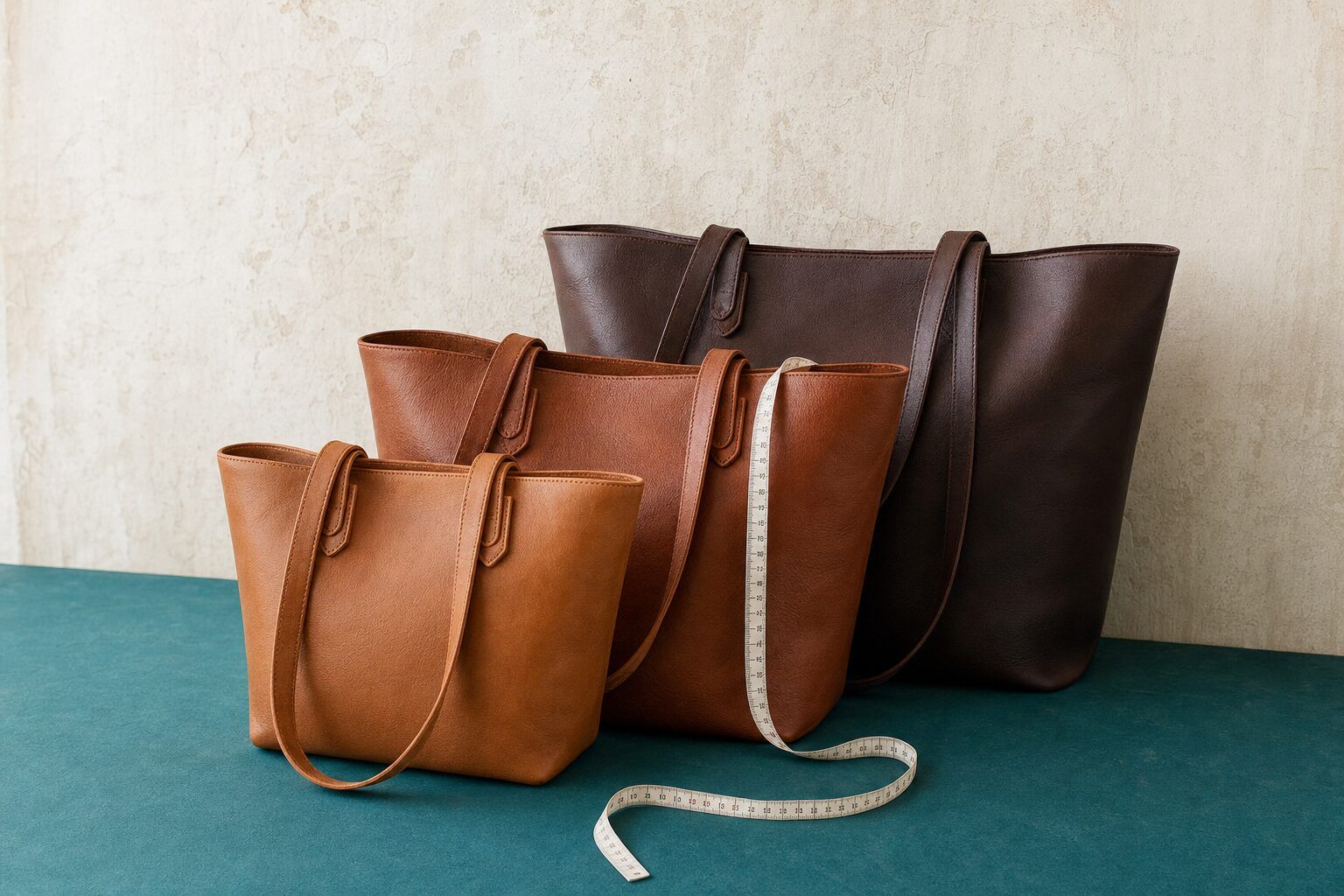
Start here
The Complete Guide to Choosing the Right Bag
Start with what you carry and how you move, not with a style. This guide walks through the six questions that decide which leather bag will actually work for you.
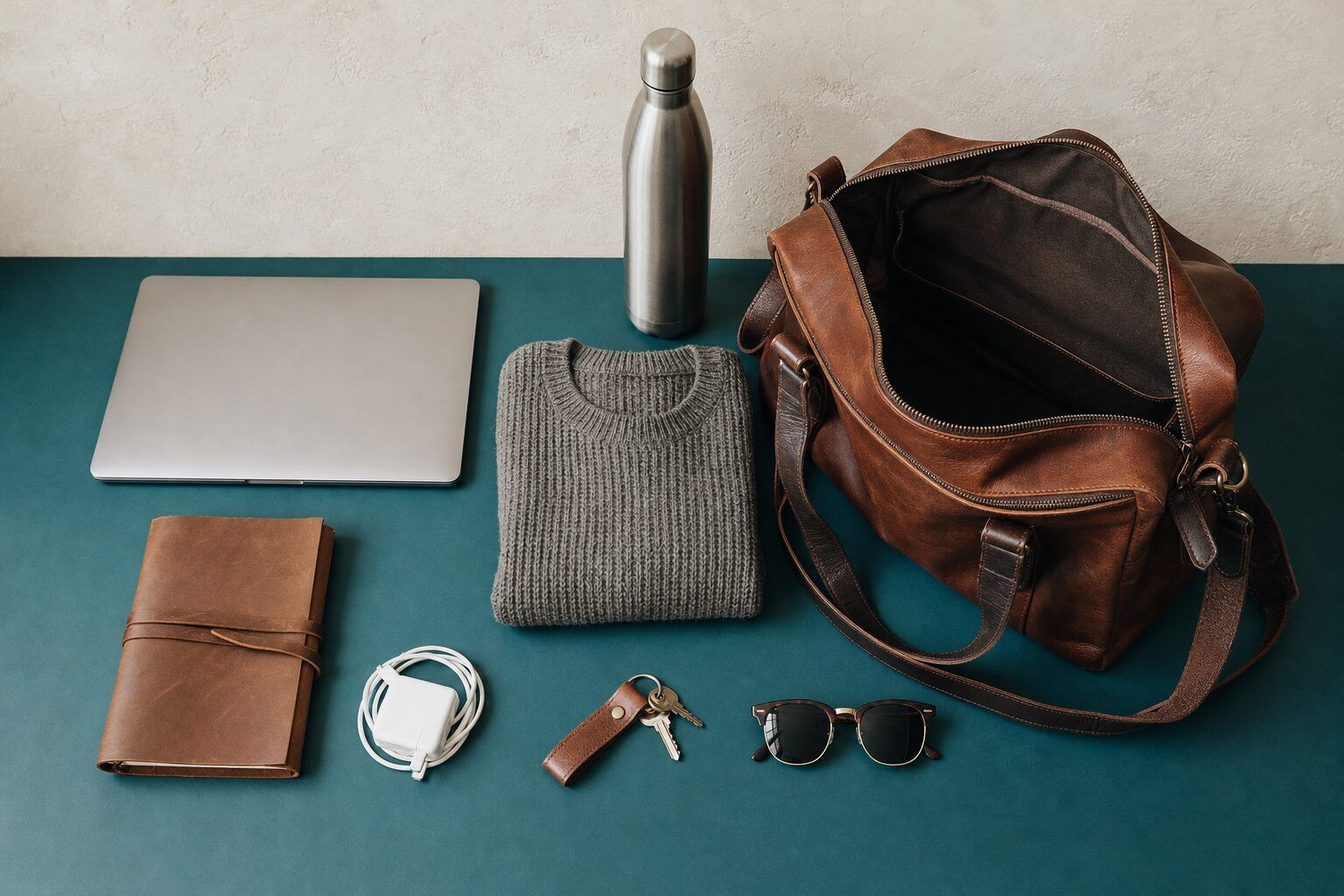
Most bag regret comes from buying the look first and finding out later that the bag doesn’t fit the life. A beautiful briefcase is a bad buy if you bike to work. A big duffle is a bad buy if you mostly need somewhere to put a laptop.
So this guide starts with you, then gets to leather.
Question 1: What do you carry on a normal day?
Put everything you carry on a table. Be honest, including the charger, the water bottle and the jacket you take off at lunch. Then sort it into three piles:
- Always: laptop, phone, wallet, keys, charger.
- Often: notebook, lunch, water bottle, a layer.
- Sometimes: gym clothes, a change of shoes, a camera.
Your bag needs to fit the first two piles comfortably, with a little space left. The third pile is where people overbuy. If “sometimes” means once a month, carry a second bag that day.
Question 2: How do you get around?
| You mostly… | Bags that work | Bags that fight you |
|---|---|---|
| Drive and walk short distances | Briefcase, tote, messenger | Very little |
| Walk 20+ minutes or take transit | Messenger with a wide strap, backpack | Hand-carry briefcase |
| Bike | Backpack, crossbody messenger with a stabilizer strap | Tote, briefcase |
| Fly often | Briefcase or messenger with a luggage pass-through, plus a duffle | Anything without a top zip |
Weight matters more than people expect. Thick full-grain leather bags often weigh 4 to 7 pounds empty, before you put anything in them. That’s fine in a car and tiring on a long walk.
Question 3: Do you need both hands free?
If yes, you want something worn on the body: a backpack or a crossbody messenger. Shoulder bags and totes slide off when you reach for a door or a coffee. Briefcases need a hand unless they come with a strap, and most good ones do.
Question 4: How formal is your day?
A structured briefcase reads as formal. A messenger reads as relaxed but professional. A tote sits in between, depending on the shape. A duffle is a travel bag, full stop, and looks out of place in most offices.
Color shifts this too. Dark brown and black dress up. Tan and distressed leathers read casual.
Question 5: Does it need to close?
Open-top totes are quick to use and easy to pick-pocket. If you ride transit or set your bag down in public, look for a zip top, a flap or at least a magnetic snap. Flaps with buckles look good but slow you down. Many makers hide magnets or quick-release clips behind the buckles for that reason.
Question 6: How long do you want it to last?
This is where leather enters. A bag you use daily takes a beating at the strap anchors, the bottom corners and the zipper. For something meant to last years, look for:
- Full-grain leather, not “genuine leather” or bonded leather. See full grain vs genuine leather.
- Stitched and riveted strap anchors, not glued tabs.
- Metal hardware, ideally solid brass or stainless steel.
- A real warranty that covers seams and hardware.
Our guide to what makes a bag durable goes through each of these in detail.
Putting it together
Here’s how the answers usually land:
- Office worker who drives: a slim briefcase with a shoulder strap.
- Commuter who walks or takes transit: a messenger, or a leather backpack if the load is heavy.
- Laptop-heavy hybrid worker: a messenger or briefcase with a padded sleeve. Read what to look for in a laptop bag.
- Weekend traveler: a 40 to 50 liter duffle. See what size bag you need.
- Everyday errands and work: a structured tote with a zip.
If you want a quick answer, the Bag Decision Framework asks you five questions and suggests a type. Then read the owner review roundups to see how specific bags hold up after people buy them.
Frequently asked questions
What is the most versatile leather bag?
For most people a medium messenger or a slim briefcase with a shoulder strap. Either one handles a laptop, papers and a few daily items, and works for both office days and short trips.
Should I buy one bag or two?
If you commute every day and travel more than a few times a year, two bags usually work better than one compromise. A daily work bag and a weekend duffle cover almost every situation.
How much should I spend on a first leather bag?
Enough to get full-grain leather and stitched, reinforced strap points. In our reading of owner reports, that tends to start somewhere around $120 to $200 for a messenger. Below that, check the leather and hardware claims very carefully.
Still deciding? Answer five quick questions and we'll point you to the bag type that fits.
Find my bag type